
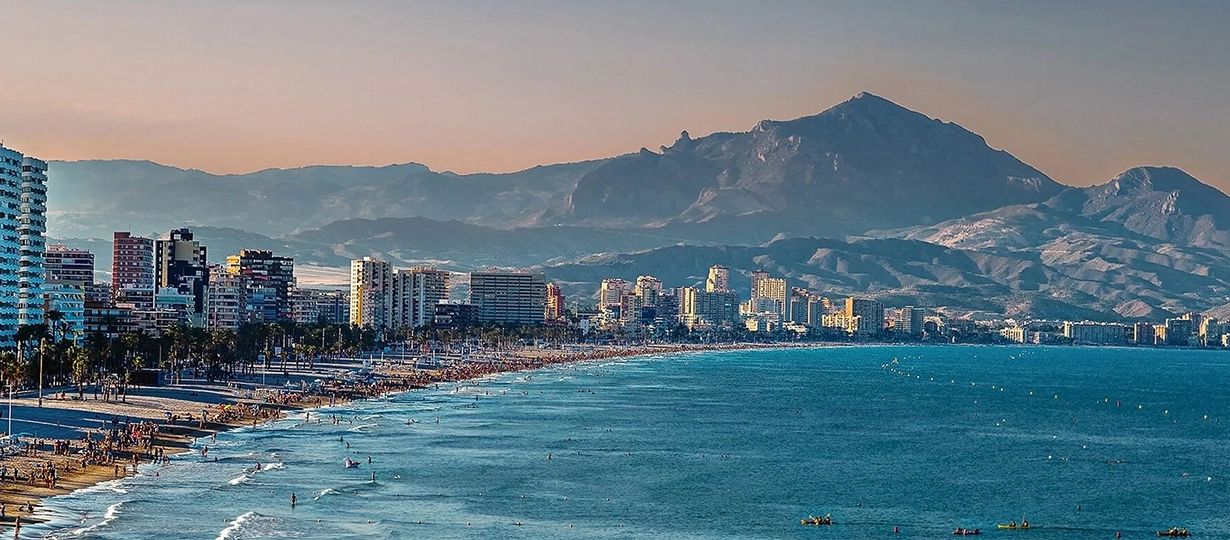
For motorhomers heading to the Costa Blanca
Bringing Your Motorhome to Spain — The Practical Stuff Nobody Tells You
Most of what catches people out on the Costa Blanca isn’t on the DVLA website or in the campsite brochure. It’s the small things — paying for a job, carrying cash, where to service the van, who to call when something breaks.
From someone who fixes them here — Dénia to Villajoyosa and inland
- Paying for things
cards, cash, Bizum - Servicing & repairs
why the queue is long - If it breaks down
the grúa, insurance, who to call - Aires & wild camping
what’s legal, what’s not
Why this guide exists
Written by the people who fix them, not the people who sell them
Every motorhome guide online is a list of campsites and a phone number for breakdown cover. None of them tell you what actually happens when the alternator dies on a Sunday in Benidorm, or why the taller in Calpe can’t take your van for two weeks, or that the autonomo fixing your starter doesn’t take Amex.
We fix motorhomes on the Costa Blanca. This is what we see owners learn the hard way — usually in the first month. Read it before you come, not after something breaks.
What’s in this guide
- Paying for things — cards, cash and Bizum
- Carry cash, in small notes
- Service the van before you come — and find your mechanic before you need one
- Find a mechanic for the base vehicle — before you need one
- Breakdown cover and the grúa
- ITV — what it is, and who it’s actually for
- Aires, campsites and wild camping
- Staying long? Skip the right-hand-drive car
01
Paying for things — cards, cash and Bizum
Your UK bank card works in most Spanish shops, restaurants and campsites. It’s when you need to pay a person — a tradesman, a private seller, someone doing a job for you on the spot — that things get awkward.
In Spain, locals pay each other through Bizum — a phone-to-phone payment system tied to a Spanish mobile number and a Spanish bank account. Almost everyone uses it. A British bank card has no access to Bizum, and a UK phone number can’t register for it. It’s not that the card doesn’t work — it’s that the payment rail everyone here uses doesn’t exist for you.
So if you need to pay someone and you can’t use cash, you fall back on a bank transfer. A transfer from a UK bank to a Spanish account is not instant. It can take half a day, sometimes until the next working day. On a Friday evening or a Sunday, it goes nowhere until Monday morning — the money simply isn’t there yet, and the person doing the work has no reason to trust a screenshot.
And if the amount is bigger — €200, €300, €500 — the UK bank may hold the transfer for verification. A payment to an unfamiliar Spanish account is exactly the pattern their fraud system watches for. They’ll call you, ask questions, want to confirm it’s really you. That conversation can take a day or two. Meanwhile whatever you needed to pay for is still not paid.
Cash doesn’t have any of these problems. €300–400 in €10 and €20 notes covers you for anything unexpected — a service call, a tow off a beach, a taxi while the van is off the road. It’s not a rule, it’s just that cash is the one payment method that works here the same way it does at home.
Spanish ATMs charge your UK bank a small fee per withdrawal (usually €1.50–€3) and give you a worse rate than Revolut or Wise. Withdraw €200–300 at a time, once or twice a month, rather than €50 every couple of days.
02
Carry cash, in small notes
Not a lot. Enough. Around €300–400 in €10 and €20 notes will cover you for anything unexpected — a service call, a tow off a beach, a taxi when the van is off the road.
The reason isn’t that cards don’t work here. Your UK card is fine for shops, restaurants, petrol and campsites. The reason is that when you need to pay a person on the spot — someone who’s come out to do a job, or someone selling you something face to face — the payment method they expect isn’t the one you have.
Locals pay each other through Bizum. Almost everyone on the coast uses it — from campsite handymen to people selling second-hand parts. A UK phone number can’t register for Bizum and a UK bank card has no way into it. So without cash, you fall back on a bank transfer, and a UK-to-Spain transfer isn’t instant. It can take half a day, and on a weekend it sits until Monday morning. If the amount is over €200–€500, the UK bank may hold it for verification — a call from their fraud team, a few questions, a day or two of waiting.
Small notes matter too. If you hand over a single €200 note for a €60 job, you’re asking the person to spend the rest of the day finding change. If you can’t break it, they have to — and nobody likes being that customer. Cash out at an ATM in increments of €100 or €200, but ask for tens and twenties if the machine lets you choose.
Spanish ATMs charge your UK bank a small fee per withdrawal (usually €1.50–€3) and give you a worse rate than Revolut or Wise. Withdraw once or twice a month rather than €50 at a time.
03
Service the van before you come — and find your mechanic before you need one
This is the single most useful piece of advice in this guide. Get the van serviced before you leave the UK. Not because it’s cheaper there — it isn’t, necessarily — but because it’s easier. UK workshops know your van, they have the lift, they have the parts, and you can book a slot that fits around your departure date.
Once you’re here, servicing a motorhome is a different game. A two-post ramp is built for a car. Even a modest 3.5-tonne motorhome — 6–7 metres long, close to 3 metres tall — doesn’t fit on most of them. So the talleres that can take a motorhome are few, and they’re booked weeks in advance. If you wait until the service is overdue, you’ll be ringing around for a slot you can’t get.
The second half of this advice: find a mechanic before something breaks, not after. Message someone in your first week here — even just to introduce yourself and say «I’m on the coast, motorhome is on Ducato, here’s my number». If nothing happens, you’ve lost five minutes. If something does happen, you’re already a known contact and you don’t spend Sunday afternoon messaging six numbers that don’t answer.
We’re one option on the coast — see what we do at your pitch →. If we can’t help with a particular job, we’ll say so and point you at someone who can. And if you’re curious what this looks like in practice, we publish real jobs on the coast — the last one was a motorhome with a dead starter and a family who needed to get back to the UK by Monday — read the job here →.
If you’re going to be here a while and want the service done anyway, we do mobile oil and filter changes at your pitch — no lift needed, no booking weeks out.
04
Find a mechanic for the base vehicle — before you need one
If you spend any time around Benidorm, Calpe or Jávea, you’ll see vans marked with something like «motorhome service» or «camper repair» on the side. They look like exactly what you need. They usually aren’t.
Those vans almost always handle the habitation side — air conditioning, water systems, fridges, 12V and 230V wiring inside the living area, sometimes bodywork. That’s a real job, and there’s plenty of it on the coast. But it’s not the same job as the base vehicle.
If a wire under the dash chafes through, if the starter dies, if the alternator stops charging, if the engine management light comes on — that’s not a habitation job. That’s a mechanic’s job, on the commercial van chassis underneath everything. The two skills overlap almost not at all, and a habitation specialist will usually tell you so and send you elsewhere.
Why this matters, in numbers. For a recovery company or an insurance policy, a dead starter or a charging fault is a full breakdown event — the grúa comes out, the vehicle goes into a taller, sits in the queue for a bay big enough to lift it, and the recovery plus the storage plus the garage time eats a big slice of your yearly breakdown budget. And the wait is measured in weeks, not hours.
For a mobile mechanic, the same fault is a diagnosis and about an hour and a half of work on your pitch. That’s the whole difference — same starter, same alternator, same wire, completely different cost in time and money. Any vehicle will break at some point. Build that assumption into your trip, and know who you’d call before the call is needed.
Our motorhome mechanic service covers the base vehicle at your pitch — see what we do on the base vehicle →. For habitation work, a specialist is the right call.
05
Breakdown cover and the grúa
The grúa is the recovery truck. In Spain it’s a regulated service, dispatched through the insurance company or through your breakdown policy, not something you call privately off Google unless you’re prepared to pay the full retail price — usually €150–€300 for a local tow, more if you’re going any distance.
Two things catch British motorhomers out here. First: a UK-issued European breakdown policy will get you home, but it won’t always cover a local tow to a garage on the coast — you’ll be told to wait for a recovery truck that will take the vehicle to a port and ship it back, which is fine for a dead van but overkill for a dead starter motor. Second: the number on your insurance policy is not the number you call. You call the Spanish emergency line, they contact the local grúa operator, and you wait — on the coast in high season, that wait can be two hours on its own.
What works better: have a mechanic you can call first. Nine times out of ten, the thing that looks like a breakdown to the recovery company is a starter, a battery, an alternator or a wire — none of which need the vehicle off the road. A mechanic who can come to the pitch, diagnose it and fix it on the spot saves you the tow, the garage slot, and the wait for the parts to arrive from Germany that usually follows.
If it does need to be moved — a real mechanical failure, an accident, something in the road — read our page on what to do when you break down in Spain →. It walks through the grúa, insurance, and what happens next.
06
ITV — what it is, and who it’s actually for
ITV is the Spanish roadworthiness test. If your vehicle is registered in Spain, it has to pass it on a set schedule — brakes, lights, emissions, chassis, tyres, and for motorhomes the habitation gas installation too. If your motorhome is on UK plates, an ITV is a completely separate document from your MOT — different system, different authorities, different rules.
Here’s the thing that motorhomers on the coast learn quickly: most of the British owners you’ll meet aren’t doing a full relocation. They’re doing something else — crossing the border periodically to keep their UK residency status, keep their UK tax footprint minimal, and enjoy Spanish prices while still being British on paper. If that’s the life you’re planning, ITV isn’t on your radar, and it won’t be.
If you’re doing a proper relocation — actually becoming resident here, registering a vehicle, paying Spanish tax — then ITV becomes your future, and the question stops being a mechanic’s question and becomes a legal one. That’s a conversation for a gestor or a lawyer, not for us. Those are the people who do this every day and know how it interacts with your residency, your tax situation and your pension.
We’re mechanics. What we can tell you is what happens to the van — and if something goes wrong with it, on or off the road, that’s the bit we do help with.
If your situation is more complicated than «just chilling and crossing the border» — talk to a lawyer. Not a forum, not us.
07
Aires, campsites and wild camping
Three different things, three different rules. Mixing them up is how people end up with a fine on the windscreen or a knock on the door at midnight.
Aires
Serviced stops, usually free or cheap
An aire is a designated stop for motorhomes — often a parking area with a fresh water tap and a drain for grey and black water, sometimes with electricity points. Prices vary from free (rare) to about €10–€15 per night. You usually can’t put out chairs and awnings, and stays are often capped at 24 or 48 hours. The Spanish network is smaller than France’s, but the ones that exist are well-maintained.
Campsites
Full facilities, higher price, no ambiguity
A campsite is what you expect: marked pitches, electricity, water, showers, laundry, sometimes a pool and a bar. Prices on the Costa Blanca run from about €20 to €60 a night depending on season and facilities — the coast in July and August is at the top of that range and needs booking in advance. Everything is legal, everything is organised, and you can put your awning out.
Wild camping
Read the rules. They change by region
Overnight parking outside a designated area is a grey zone in Spain. Rules differ between autonomous communities — some allow a single night if you don’t put anything outside the vehicle, others fine anything that looks like camping. The Costa Blanca and Murcia are stricter than many northern regions. What’s usually safe: parking overnight in a normal car park without extending anything outside, sleeping inside the vehicle, and moving on in the morning. What’s usually not: chairs, awnings, tables, a barbecue, levelling ramps, anything that turns parking into camping.
Fines for camping where it isn’t allowed can run from €100 to several hundred euros, issued on the spot. Check with the local ayuntamiento or a gestor if you’re unsure — and never leave anything outside the van on a public car park, even overnight.
Grey water and black water. Empty them at designated service points only — aires, campsites, and public motorhome service areas (they’re called áreas de servicio para autocaravanas in Spanish). Never at a normal drain, never at the side of a road, never on the beach. On the coast this is enforced, and campsites have been known to expel guests who emptied tanks on their pitches.
08
Staying long? Skip the right-hand-drive car
A friendly tip from people who see this every week. If you bring a British right-hand-drive car down and end up loving it here, selling it locally is not the easy exit you might expect. Range Rovers, Land Rovers, premium cars in good condition and low mileage — they sit on Spanish marketplaces for months, discounted to prices that would embarrass the UK market. Nobody here wants a right-hand-drive car, so the discount is brutal.
What experienced motorhomers do instead: come down in the motorhome, and buy a small left-hand-drive runaround locally. Old, small diesel, cheap to insure, cheap to run, easy to sell when you leave. A used Spanish hatchback — a Seat, a Citroën, a Renault — costs less than bringing a UK car down for the season.
Not advice — just the pattern. You’ll see it in every aire and campsite car park from Dénia to Torrevieja.
FAQ
Frequently asked questions
What motorhomers ask before they set off — the ones that don’t have a clean answer on the government websites.
Can I park overnight in Spain in a motorhome?
It depends where. On the Costa Blanca and in Murcia the rules are stricter than in much of northern Spain. What’s usually fine: parking overnight on a normal car park, sleeping inside the vehicle, moving on in the morning, and not extending anything outside. What’s usually not: chairs, awnings, tables, levelling ramps — anything that turns parking into camping. Fines can be issued on the spot from €100 upwards. If you’re unsure, use an aire or a campsite for the night; if you’re really unsure, check with the local ayuntamiento before you park.
Do I need a Spanish ITV on my UK motorhome?
Only if you’re doing a full relocation — becoming resident, registering the vehicle, paying Spanish tax. Most British owners on the coast aren’t doing that. They cross the border periodically to keep their UK residency status and their UK tax footprint small, and stay here on that arrangement. If that’s your plan, ITV isn’t part of the picture. If you’re genuinely relocating, ITV becomes relevant, and that’s a question for a lawyer or a gestor — not a mechanic, and not a forum.
What should I do if the motorhome breaks down?
Call a mobile mechanic first, not the insurance. Nine times out of ten what looks like a breakdown is a starter, a battery, an alternator or a wire — none of which need the vehicle towed. A mechanic who comes to your pitch can usually fix it on the spot and save you the tow, the garage queue and the wait for parts. If it genuinely needs to be moved — a real mechanical failure, an accident, something blocking the road — that’s when you call the insurance grúa. See our page on what to do when you break down in Spain for the full picture.
Should I service the van before I come, or wait until I’m here?
Before you come, if you can. UK workshops know your van, have the lift, have the parts and can fit around your departure date. On the coast, motorhome lifts are scarce — a two-post ramp is built for a car and doesn’t fit a 3.5-tonne, 6-to-7-metre motorhome — so the talleres that can take one are booked weeks out. If you’re going to be here a while and the service is due anyway, we do mobile oil and filter changes at your pitch — no lift, no queue. But the principle stands: sorting it before you need it beats sorting it after.
Where do I empty the grey water and the toilet cassette?
At designated service points only — aires, campsites, and public motorhome service areas. In Spanish they’re called áreas de servicio para autocaravanas, and most towns of any size on the coast have one. Never at a normal road drain, never on the beach, never in a normal bin. On the Costa Blanca this is enforced, and campsites have expelled guests who emptied tanks on pitches. If you can’t find a service point, ask at the nearest campsite or an aire — most will let you use theirs for a small fee or for free.
I saw a «motorhome service» van on the coast — is that who I call if the engine won’t start?
No — that’s almost certainly a habitation specialist. They work on the living side of the vehicle: air conditioning, water systems, fridges, 12V and 230V wiring inside, sometimes bodywork. For a base-vehicle fault — a starter, an alternator, a wire, an engine management light — you need a mechanic, not a habitation specialist. The two skills overlap almost not at all. If the engine won’t start, a habitation van will usually tell you honestly that this isn’t their job and point you at someone else. It’s worth knowing the difference before you need one, because the wrong call costs you a day of ringing around while the van is stuck.
Heading this way? Ask us before you set off
If you’ve got a question about the van — whether it’ll cope with the trip, what to check before you leave, what to do if it goes wrong — send us a message. We answer honestly, and if we can’t help, we’ll tell you who can.
📲 WhatsApp us
Coming to the Costa Blanca? Message us first
If you’ve got a question before you set off — what to check on the van, whether it’ll cope with the trip, what happens if something breaks — send us a message. We answer honestly. If we can’t help, we’ll tell you who can.