
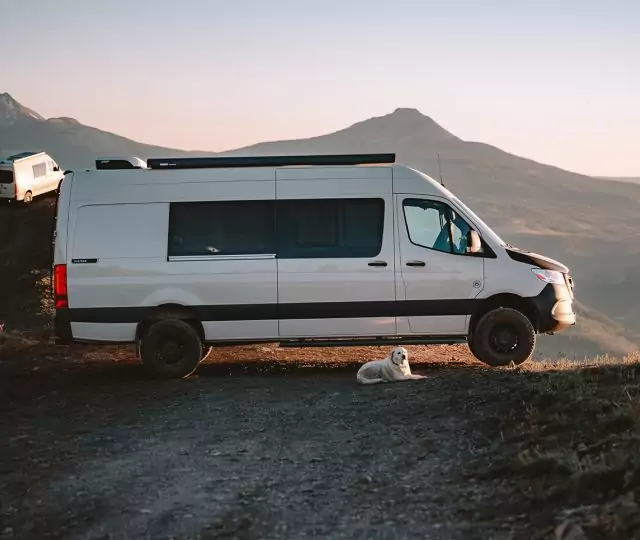
Camper van repair · Costa Blanca
Camper Van Repair on the Costa Blanca — Engine, Electrics, Conversions
Transit Custom, Transporter, Vito, Vivaro, Expert — converted vans, self-builds and full-timers. If the engine won’t start, the electrics are playing up, or the conversion wiring needs sorting, we come to where the van is parked.
English & español · Dénia to Villajoyosa and inland
- Base vehicle
engine, starter, alternator - Conversion electrics
wiring after a self-build - EN · ES
we speak both - Invoice
factura from autonomo
Not a motorhome — and not a car
A camper van is its own thing — and it needs its own approach
A camper van sits in a gap. It’s not a motorhome — it doesn’t have the weight, the length, or the coachbuilt body. It’s not a car — it has a second electrical system, a living space, and often a home inside. And it’s not factory-built, because most camper vans on the coast are conversions — some done by professional fitters, some done by the owner, some done in stages by different people with different ideas.
That last point is the one that matters most. A converted van has a base vehicle that’s been left alone by the conversion, and a habitation system that’s been completely rebuilt on top of it. When something goes wrong, the first question is always: is this a base-vehicle fault, or is this a conversion fault? Two different jobs, two different skillsets, and most workshops only handle one.
We handle both. Base vehicle — engine, starter, alternator, diesel, diagnostics — and conversion electrics — split charge, DC-DC, leisure battery, solar, 230V hookup, inverters. At your pitch, or wherever the van is parked.
If you’ve been told «we only do the engine» or «we only do the conversion» and you’re stuck between the two — that’s exactly the space we work in. Message us with what’s happening.
Van bases
The vans we work on most often
Camper vans are built on a small number of base platforms. These are the ones we see on the coast, in workshops and at pitches, every week.
- Ford Transit Customthe most common camper base in the UK and on the coast
- Ford Transit (full size)larger builds, high-tops, coach-built conversions
- VW Transporter T5 / T6 / T6.1the classic camper — many self-builds, huge parts availability
- Mercedes Vito / V-Classmid-size builds, popular for premium self-builds
- Renault Trafic / Vauxhall Vivarosame platform, common on budget conversions
- Citroën Jumpy / Peugeot Expertthe compact end of the market
- Fiat Talentorebadged Trafic — same engines, same layout
- Iveco Daily (small)heavier van conversions and some 4×4 overlanders
If yours isn’t on the list — an older T4, a rare import, an American van — message us with the make, model and year. We’ll tell you honestly whether we can help.
The one that catches people out
Conversion wiring — the part most mechanics won’t touch
A converted camper van has a whole electrical system built on top of the factory one. Split charge, DC-DC charger, leisure battery, solar, 230V hookup, inverter, interior lights, water pump, fridge. When it works, it works. When something goes wrong, the fault could be anywhere — and the average mechanic takes one look and says «that’s not the base vehicle, that’s the conversion» and hands you back the keys.
Self-builds and staged builds
Camper conversions are often done in stages — one owner does the electrics, the next adds solar, a third swaps the battery for lithium. Three different people with three different ideas of «good enough». We see the result of that every week: cable gauge that’s too thin for the run, connectors that were the wrong type, an earth that worked its way loose three years ago.
We trace the faults, we don’t guess. That means measuring current, checking voltage drop under load, and physically inspecting the wiring harness rather than swapping parts until something works.
Split charge and DC-DC charging
The leisure battery needs to charge from the alternator while you drive. There are two ways this is done — an old-style split-charge relay, or a modern DC-DC charger. Both work, both fail, and the symptoms are the same: the leisure battery goes flat even after a long drive.
Split-charge relays die quietly. DC-DC chargers fail in a way that still passes voltage but at lower current — so the battery gets a trickle instead of a proper charge. We test the whole chain: alternator output, relay/charger, cable, leisure battery.
Solar and controllers
A camper van roof usually has less space than a motorhome roof, so panels are smaller and shading matters more. A roof vent, an aerial, a surfboard rack — any of those can knock a panel’s output down by half. And a cheap PWM controller throws away another 25–30% on top of that.
We check the panel under load, the controller type and settings, the cable gauge, and the actual amp-hours going into the battery on a sunny day. If the system isn’t keeping up, we tell you why — not just sell you a bigger panel.
230V hookup and inverters
A camper van’s 230V system usually starts with an external hookup point and a small consumer unit, sometimes with an inverter for off-grid 230V. These are the components that get bodged most often — wrong RCD, undersized cable, no earth, an inverter wired into the mains circuit in a way that would shock anyone who touched it.
We check the RCD trips properly, the earth is genuinely earthed, and the inverter — if there is one — can’t ever feed back into a live mains supply. That last one is not optional. It’s a safety issue, and we fix it on sight.
We don’t do conversions from scratch — that’s a fitter’s job, and most of the work happens in a workshop. What we do is diagnose and repair the electrical side of an existing conversion, and fix the bodges that were left behind by whoever came before. If that’s not something we can do at your pitch, we’ll tell you before we set off.
Full-timers
If the van is your home, it wears differently
A camper van used for holidays is a van. A camper van lived in full-time is a different machine entirely — same shape, same engine, different failure pattern. It starts every day. It runs more miles. The fridge runs 24/7, the water pump runs several times a day, the leisure battery cycles hard, the interior lights are on every evening. Everything wears faster because everything is used more.
What we see in practice: leisure batteries that fail in two years instead of four. Alternators that die earlier because they’re constantly charging a deeply-cycled battery. Water pumps that give up after eighteen months. Split-charge relays that burn out from constant cycling. Bearings and suspension that age quicker because the van is loaded every day, not just on trips.
None of that is a design fault. It’s just what happens when a vehicle that was designed for mixed use is used as a permanent home. The trick is to check things on schedule rather than waiting for them to fail — because when the van is your home, a breakdown is not just inconvenient, it’s a problem with where you sleep tonight.
If you live in the van full-time, a short pre-summer check is worth doing every year. Water system, electrics, leisure battery under load, charging system. Catch it in April, don’t fix it in August.
Base vehicle work
The engine side is the same job — and we do that too
Underneath the conversion, your camper van is still a van. The same starter motor, the same alternator, the same diesel injectors, the same engine management system as the commercial version it was built from. So everything we do on a Transit, a Transporter or a Vito as a van, we do on the converted version.
Won’t start, battery, starter motor, alternator, diesel faults, warning lights, diagnostics, brakes and suspension in the range that doesn’t need a lift, oil and filter change, pre-travel checks. All at your pitch. All the same job whether the van is empty or has a full camper fit inside.
También en español
Si hablas español, también atendemos tu camper
Trabajamos con furgonetas camper en toda la Costa Blanca, tanto en la parte mecánica como en la parte eléctrica de la conversión. Si tienes un problema con el motor, con la instalación eléctrica que hiciste para la conversión, con la batería auxiliar, con la placa solar o con el sistema de 230V, podemos ir a donde esté aparcada la furgoneta y diagnosticar el problema en el sitio.
Trabajamos mucho con furgonetas de conversión propia — instalaciones hechas por el dueño, a veces en varias fases, a veces con componentes poco habituales. Sabemos leer ese tipo de instalación y encontrar dónde está el fallo sin cambiar piezas al azar.
Si prefieres hablar en español, escríbenos por WhatsApp con el modelo, el año, qué está pasando y dónde está la furgoneta. Te contestamos igual de rápido y con la misma honestidad.
FAQ
Frequently asked questions
What camper van owners ask us most often.
I did the conversion myself and the electrics have been playing up — can you fix someone else’s wiring?
Yes, and it’s one of the most common jobs we get. Self-build electrics are often done in stages, sometimes with mixed components, sometimes with cable that’s a bit thinner than ideal. None of that is a judgement — it’s just what happens when you build a camper yourself. We trace the fault properly rather than swapping parts until something works. If we find something that’s unsafe — a live feed that isn’t earthed, an inverter wired into the mains in a dangerous way — we fix it, and we tell you why it mattered.
My leisure battery dies even after a long drive — is that the battery or the charging system?
Almost always the charging system, and it’s often the split-charge relay or a DC-DC charger that’s giving less current than it should. What happens is: the alternator works, the cable is fine, but the relay has quietly degraded, or the charger is passing voltage at half the amperage. On a long drive, the battery gets topped up just enough to look fine — but it’s never fully charged, so it dies at the end of the next day. We test the whole chain and tell you which component is failing. If it turns out the battery is genuinely at the end of its life too, we say so.
Can you come to a van that’s parked on a street, not a campsite?
Yes, as long as it’s legal and safe to work on where it’s parked. Street parking, residential area, garage forecourt, supermarket car park — all fine. What we can’t do is work on a vehicle that’s blocking traffic, on double yellows, or in a place where stopping for two hours would be a problem. Message us with the exact location and a photo of where it’s parked if you’re not sure. We’ll tell you straight away.
Do you install solar panels on a camper van roof?
Yes. Panel, controller, cable, mounting, roof sealing. Camper van roofs are usually tighter than motorhome roofs, and shading from vents, aerials and roof racks has a much bigger effect — so sizing and positioning matter more than they do on a coachbuilt. We size the system for your actual use, not for the spec sheet. If your van already has solar and it’s underperforming, we diagnose the existing system: panel output, controller type, cable gauge, and where the shading is coming from.
I live in the van full-time — can you do the work while I’m still in it?
For most jobs, yes. Oil changes, diagnostics, electrical fault tracing, solar installs, water system work — none of that requires you to move out. If the job involves something that makes the van unusable for a night — very rare, but occasionally with bigger electrical work — we’ll tell you when we quote, not on the day. We know the van is your home. That’s part of how we plan the work.
Do you give an invoice?
Yes, always. A proper factura from an autonomo, itemising the work and parts. Useful for records, and useful if you claim on insurance. If you need it made out to a company name, tell us when we confirm the job. Same invoice whichever side of the van we’re working on — base vehicle or conversion, it’s one business and one bill.
Camper van problem? Message us
📲 WhatsApp usRelated
Other pages that might help
Base-vehicle details, breakdown triage, and the practical guide for anyone new to Spain.
Motorhome mechanic
Full detail on the base-vehicle side — engine, starting, charging, diesel, diagnostics, at your pitch.
Breakdown — what to do
Six symptoms, what each one usually means, what you can check yourself, and when to call.
Bringing a van to Spain
Practical guide — paying for things, cash, mechanic before you need one, and what happens when it breaks.
Camper van problem? Message us
Send the make, model, year, what’s happening and where the van is parked. Engine side or conversion electrics — either way, we’ll tell you what we can do and when, before you commit to anything.